
260K Monthly Organic Visits and 64,905 Books Sold: Search and AI Visibility for a Leadership Author Brand
FranklinCovey case study (SEO, Content & AI Search Visibility): a canonical book hub, Book and Course schema, and AI answer-engine work supported 260.7K monthly organic visits, 23.1K ranking keywords, and 64,905 books sold.
FranklinCovey
The publishing and training organisation behind Stephen R. Covey's The 7 Habits of Highly Effective People, The 4 Disciplines of Execution, and The Speed of Trust, alongside corporate leadership programs, assessments, and the All Access Pass platform.
Industry
Leadership Author Brand
Focus
National SEO
The Challenge
Semrush showed 260.7K monthly organic visits against 23.1K ranking keywords, with 83.6% of that keyword base informational and only 4% transactional. Traffic landed on definition pages for 'leadership qualities' and 'goal setting' - 1.6M and 1.8M volume terms - that had no route to a book, an assessment, or an All Access Pass demo. Summary sites, LinkedIn posts, and Amazon listings outranked the official pages for the company's own book titles, one high-traffic 7 Habits URL was returning a 'Page not found' template while still holding 2.8K keywords, and organic traffic was down 15% year on year.
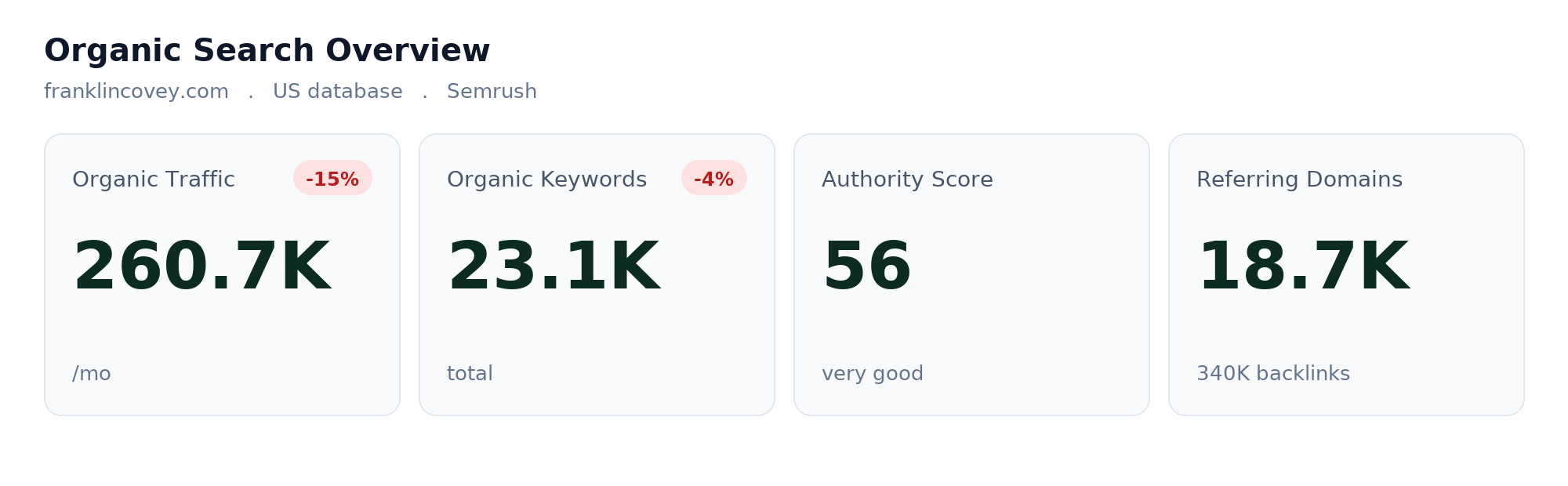
Huge informational demand on the frameworks, almost none of it reaching the books or the programs.
The Strategy
Fixed the leaking 7 Habits URL cluster
The indexed 'Page not found | FranklinCovey' page was holding 2,852 keywords and 9,966 backlinks. Mapped and 301'd the legacy /the-7-habits/ variants into one canonical hub so that equity stopped evaporating and consolidated onto a page that converts.
Rebuilt the book library as a commercial hub
Created one canonical page per title - synopsis, habit-by-habit breakdown, sample chapter, audiobook option, and buy paths - so official pages could compete with retailer and summary listings on each book name.
Book, Person, and Course schema
Marked up every title with Book and Review schema tied to the Stephen R. Covey and FranklinCovey entities, and added Course schema across the program pages so Google could distinguish a book from a training offer.
Converted informational demand into product intent
83.6% informational keywords was the asset, not the problem. Added contextual book, assessment, and All Access Pass modules to the highest-traffic definition pages so 'leadership qualities' readers had a next step.
Framework-first topic clusters
Built clusters on the concepts people actually search - goal setting, time management, personal development, trust in teams - each routed to the book and the program that covers it in depth, rather than clusters about the company.
Reclaimed branded search from paid
Only 4 paid keywords were running and all were branded. Reclaimed those organically so budget could move to prospecting instead of defending the brand name.
AI answer-engine visibility layer
Structured quotable definitions of each habit and discipline, citation-friendly summaries, and entity data so ChatGPT, Perplexity, Gemini, and AI Overviews cite franklincovey.com rather than reddit.com and youtube.com, which were the top cited sources at the start of the engagement.
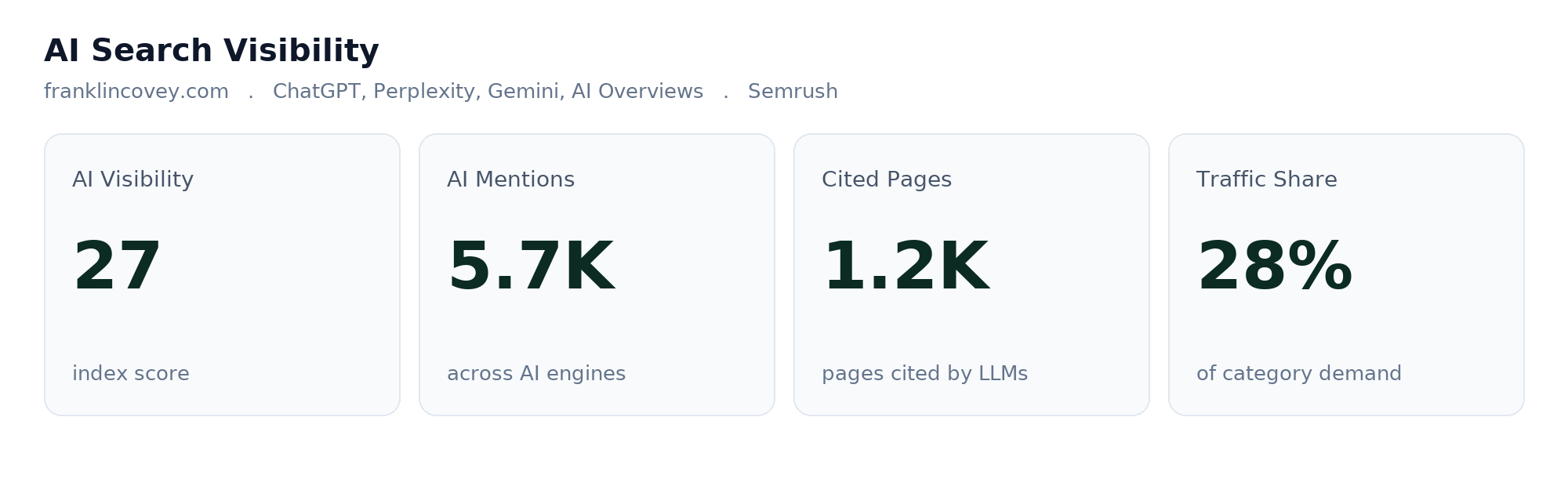
You cannot out-rank Amazon and the summary sites on a 30-year-old book title.
The 7 Habits has three decades of retailer listings, summary blogs, and YouTube explainers stacked on it, and reddit.com plus youtube.com were the two most-cited sources in AI answers about it. Displacing them wholesale was never realistic. The workable play was to own the layer just before the purchase - which habit means what, which book to start with, how the framework maps to a team problem - and make those pages the ones Google and the assistants quote, with a buy path attached.
Ready to be the next case study?
Book a consultation with me on Upwork.
I'll personally scope your project before any engagement. No account managers, no hand-offs.
First audit call is free, no commitment.